

Skin around the face and neck can become less firm with age. If you are looking for an option that does not involve surgery, you may have come across HIFU.
HIFU stands for High-Intensity Focused Ultrasound. It uses focused ultrasound energy to heat selected areas beneath the skin, with the aim of encouraging collagen remodelling.
It is not a surgical facelift, and the change is usually more modest. Whether it is suitable depends on your skin, the area you want treated and the device being used. A consultation can help you understand what the treatment may realistically achieve.
So, What Exactly Is HIFU and Why Is Everyone Talking About It?
HIFU uses focused ultrasound energy to create controlled areas of heat beneath the skin. This process is intended to trigger a healing response and encourage collagen remodelling, which may improve the appearance of mild skin laxity.
Collagen helps give skin its structure and support. Its levels and organisation change with age, which can contribute to a gradual loss of firmness.
Why do people consider HIFU?
- It does not involve surgical incisions.
- Changes, when they occur, tend to develop gradually.
- It may be an option for people with mild to moderate skin laxity.
- Treatment does not usually require the recovery associated with a surgical facelift.
HIFU has limits, though. It cannot remove substantial excess skin or reproduce the results of facelift surgery. The likely outcome depends on the treatment device, the area being treated and individual skin characteristics.
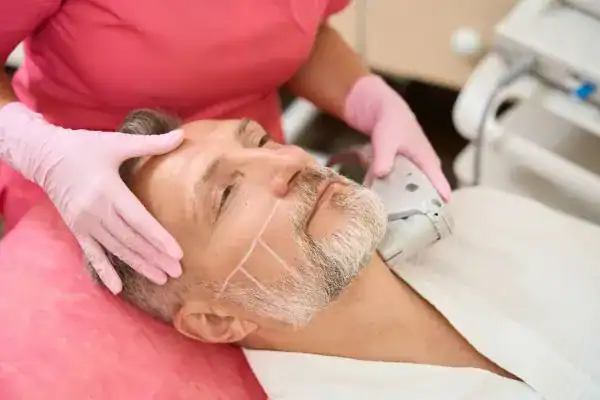
How Your Skin Gets Lifted—Without a Single Cut
HIFU directs focused ultrasound energy to selected depths beneath the skin. The energy creates small areas of controlled heating, which can start a tissue repair response.
This process may:
- Encourage the production and remodelling of collagen.
- Cause changes in existing collagen fibres.
- Gradually improve the appearance of skin firmness in some people.
The response is not immediate or identical for everyone. Any visible change develops over time, and the degree of improvement varies. HIFU should not be presented as a guaranteed lift or a substitute for surgery.
Check out more: HIFU vs Over-The-Counter Treatments
No cuts. No stitches. No holing up while you are recovering.
Areas You Didn’t Know HIFU Could Treat
HIFU is commonly discussed in relation to facial and neck skin tightening. Depending on the device and its approved or intended use, treatment may be considered for areas such as:
- Lower face and jawline
- Under the chin
- Neck
- Brow area
Not every HIFU device is designed for every body area. Treatment suitability also depends on the depth and condition of the tissue being treated. Ask the LipoFreeze2U Bournemouth practitioner which areas their specific device is intended to treat.
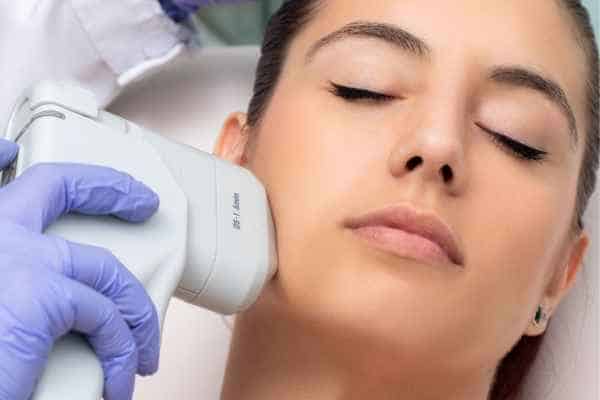
Who is the Ideal Candidate for HIFU Non-Surgical Treatment?
HIFU may be worth discussing if you have mild to moderate skin laxity and would prefer to explore a non-surgical option.
It may be considered by people who:
- Have started to notice reduced firmness around the lower face or neck.
- Want to explore a treatment that does not involve surgical incisions.
- Understand that any improvement is likely to be gradual and may be modest.
- Have realistic expectations about what non-surgical skin tightening can achieve.
Age alone does not determine whether someone is suitable. Skin condition, medical history, the treatment area and the device being used all need to be considered.
At Lipo Freeze 2U Bournemouth, a consultation allows the team to discuss your concerns and assess whether this treatment is appropriate. HIFU is not suitable for everyone, and the practitioner should explain relevant risks and alternatives before treatment.
Check Out Our HIFU Non-Surgical Bournemouth Facelift Treatment
When Will You See Results and How Long Do They Last?
The timing and extent of any visible change after HIFU can vary. Some people notice a difference sooner than others, while others see little improvement.
Collagen remodelling takes time, so changes are generally assessed over the weeks and months following treatment rather than immediately.
There is no single timetable that applies to everyone. How long any improvement lasts also depends on factors such as the device, treatment settings, skin condition and natural ageing. Your practitioner should explain what is realistic for your circumstances and whether any follow-up treatment may be appropriate.
HIFU vs Traditional Facelift: What’s the Difference?
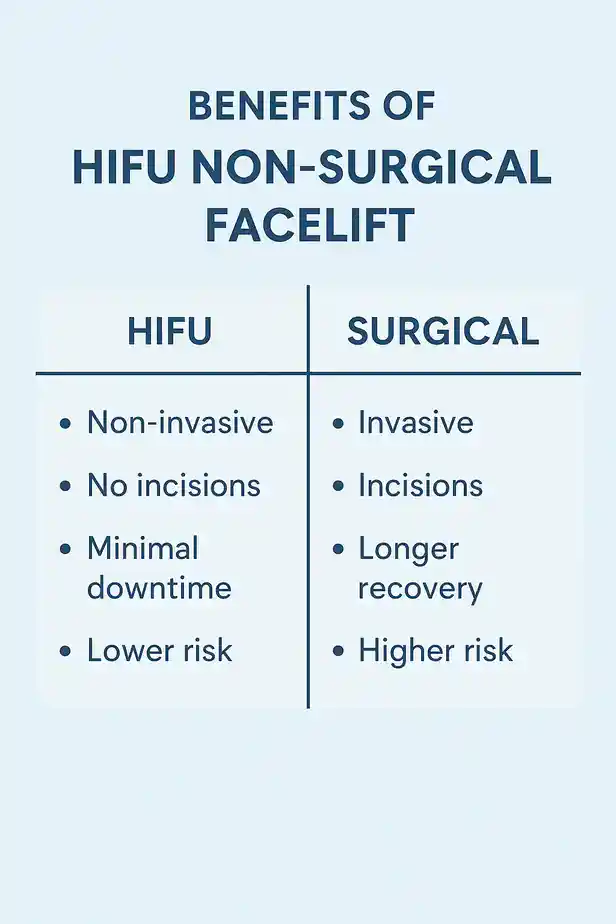
A facelift involves surgery to address sagging facial tissues and excess skin. HIFU takes a different approach. It sends focused ultrasound energy beneath the skin in an attempt to improve firmness over time. It does not involve an operation or remove loose skin.
HIFU
- Does not involve surgical incisions.
- Aims to improve the appearance of skin firmness.
- Any visible change is generally gradual.
- May be considered for selected people with mild to moderate skin laxity.
- Does not remove significant excess skin.
Traditional facelift
- Is a surgical procedure.
- Can address more substantial skin laxity and tissue descent.
- Involves incisions, anaesthesia and a recovery period.
- Carries surgical risks and results in scars.
Neither option is right for everyone. If you have significant loose skin or want a more substantial change, a consultation with an appropriately qualified surgical specialist can help you understand the available options. HIFU should not be described as providing the same results as facelift surgery.See here: HIFU vs LipoFreeze: Which Is Better for Skin Tightening Without Surgery?
Frequently Asked Questions (FAQs) For HIFU Non-Surgical Treatment
Q: Does it hurt, or is the HIFU non-surgical treatment comfortable to sit through?
People can experience different sensations during HIFU. Some describe warmth, tingling or brief discomfort in the treated area. How it feels depends on the device, treatment settings and area being treated. Your practitioner should explain what to expect before the session.
Q: How much time is required for a full HIFU non-surgical treatment Bournemouth?
Treatment time depends on the size of the area and the device being used. Your clinic can confirm the expected appointment length when discussing your treatment plan.
Q: Is there any downtime after the treatment, or am I free to resume regular activities?
Many people return to their usual activities after treatment, but temporary redness, swelling, tenderness or discomfort can occur. Your practitioner should explain the possible after-effects and advise you if any activity restrictions are needed.
Q: Am I going to need more than one session for visible results?
The number of sessions depends on the device, treatment area and your individual assessment. Some treatment protocols involve one session, while others may recommend more. Your practitioner should explain the proposed schedule and the reasons for it before you decide.
Q: Is HIFU non-surgical suitable for all skin types and tones?
HIFU suitability should not be assumed from skin tone alone. The device, treatment settings, skin condition and medical history all matter. A practitioner should assess the treatment area and explain any relevant risks before proceeding. Ask which device is being used and whether it is suitable for your individual circumstances.
Q: Does HIFU non-surgical replace fillers or Botox treatments?
No. If your main concern is lost volume, fillers may be considered. For lines that appear when you frown or smile, Botox may be an option. HIFU is more relevant when the concern is loose or less firm skin. The treatments aren’t alternatives for the same problem, so the choice depends on what you want assessed.
Q. What to avoid after HIFU non-surgical treatment?
Aftercare advice depends on the device and the area treated. Follow the instructions given by your practitioner, particularly if you experience redness, swelling or tenderness. Contact the clinic if you develop an unexpected or persistent reaction.
Q: How do I know if HIFU non-surgical Bournemouth is right for me?
A consultation is the best way to discuss whether HIFU is suitable. The practitioner should review your medical history, examine the area you want treated, explain the expected benefits and possible risks, and discuss other options where appropriate.
Q: Is HIFU non-surgical Bournemouth good for a double chin or sagging neck skin?
HIFU may be considered for selected cases of mild skin laxity around the jawline and neck. The result depends on the amount and type of tissue involved, as well as the device used. A double chin can also be related to fat distribution, so HIFU may not address the main concern in every case. An assessment can help establish whether it is an appropriate option.
Q: Do the results have a natural or obvious look to others?
Any visible change is usually gradual rather than an immediate transformation. The extent of improvement varies, and some people may notice very little difference. Your practitioner should discuss realistic expectations before treatment.
For Further Information, Please Call Us On 03300 105 225